Scenic USA - Florida
Each day Scenic USA presents a different and interesting photo feature from somewhere in
the United States. Chosen from a wide variety of historic sites, city scenes, backcountry
byways, points of interest and America's best parklands, this site offers the viewer hundreds
of unique vacation destinations and photographic subjects. Each feature is coupled with a
brief explanation. For further detailed information, links to other sites are provided, however
these links should not be considered an endorsement.

Other nearby
Points of Interest
Fairchild Tropical Botanic Garden
At no extra cost to you, using this link helps support Scenic USA when you shop on-line at Amazon
Miami Night Skyline
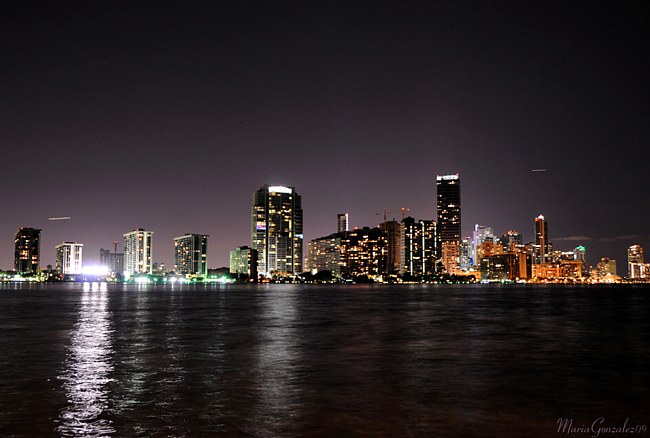
| Photos by Maria Gonzalez Maria Gonzalez Photography |
Tequesta Indians lived on and around Florida's Biscayne Bay area for hundreds of years before the arrival of the first non-Native settlers. Its modern day history dates back to the late 1800s and some believe it begin with Julia Tuttle and her enormous land purchase in 1891. The one time Cleveland resident moved south and took on a large citrus plantation. This land parcel on the tip of Florida's peninsula lacked any continuous road to the north and relied on water routes to ship out citrus fruit and import necessities. William Brickell and Julia Tuttle, both Biscayne Bay residents, did their best to entice railroad magnate Henry Flagler to extend his Florida East Coast Railway southward. Their request went unanswered until a winter of freezing weather destroyed most of Florida's vegetable and fruit crops. Two hard freezes left Tuttle's citrus crop unscathed. A story still lingers on today that Julia sent Henry Flagler a cluster of orange blossoms, convincing Flagler that south Florida was frost proof.
In exchange for a rail connection, Tuttle offered 100 acres of bayside land, enough for Flagler to build a hotel and recoup cost of the railroad extension. By 1896 a railroad connection to Miami was complete, the Royal Palm Hotel was under construction, a real estate boom was underway and the City of Miami was placed on the map. Residents were dead-set on honoring Flagler, planning to name the city after him. Because Flagler was against it, the city went on to take the name from the Mayaimi Tribe of southern Florida.
Today, the Greater Miami Area remains a vacationer's paradise, centered around the Biscayne Bay and one of Florida's most famous shorelines on Miami Beach.
Area Map
Copyright © 2009-14 Benjamin Prepelka
All Rights Reserved