Scenic USA - Arizona
Each day Scenic USA presents a different and interesting photo feature from somewhere in
the United States. Chosen from a wide variety of historic sites, city scenes, back-country
byways, points of interest and America's best parklands, this site offers the viewer hundreds
of unique vacation destinations and photographic subjects. Each feature is coupled with a
brief explanation. For further detailed information, links to other sites are provided, however
these links should not be considered an endorsement.

Other nearby
Points of Interest
At no extra cost, using this link helps support Scenic USA when you shop on-line at Amazon
Tonto National Monument
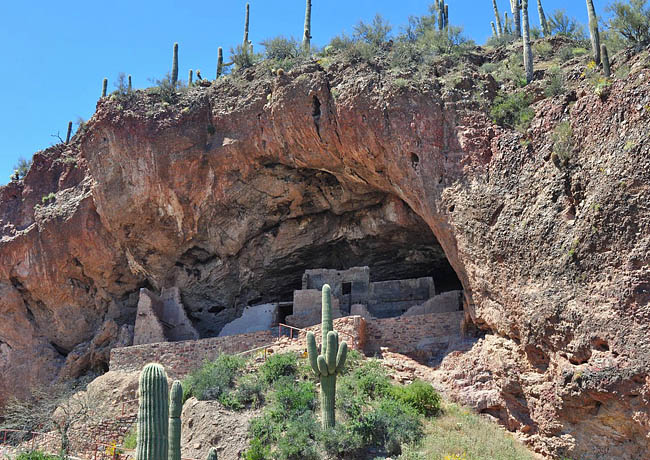
| Photo by Sierra Reece Sierra's Photo Gallery Inset photos courtesy the National Park Service |
Arizona’s Tonto Basin, found in a rich agricultural land of the 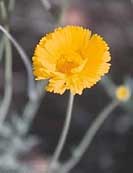 Sonoran Desert, was first inhabited during the 1st century. Here, among the sycamore, mesquite and walnut trees, and alongside the Salt River and Tonto Creek, Eagle Ridge inhabitants planted corn, beans, squash and cotton. Deer, rabbit and quail were plentiful until climate changes forced an over populated community to migrate to a more favorable location.
Tonto Basin was rediscovered during the early 13th century, once again supporting a bustling population. Farmland now relied on an intricate irrigation system, adding more crops to their diet, while still depending on local game. 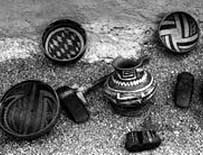 An assortment of painted pottery styles marked the influx on new migrants, leading archeologists to refer to this mixed community as the Salado Culture. A period of increased rainfall brought about an excess in food production, boosting an already dense population. This abundant rainfall, lasting several decades, came to an end, resulting in food shortages and rising tensions among the villages. Some communities moved into protective areas, building defensible structures in sheltered caves. By 1450 all the Tonto Basin residents had fled, scattering in all directions.
Tonto Basin was again rediscovered by soldiers and ranchers 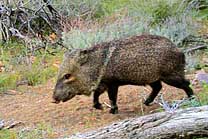 in the mid 1870s. Using the power of a new Antiquities Act, President Theodore Roosevelt saw to it that Tonto National Monument was added as protected parkland in 1907. Piecing together clues from the past, Salado artifacts give today’s visitors an idea how early inhabitants successfully coped with the harsh desert environment. Pictured here is the 20 room Lower Cliff Dwelling, fitting into a shallow cave 40 feet high, 85 feet wide and 48 feet deep. Self guided tours along the mile long Lower Cliff Dwelling Trail offer close-up views of this well preserved Salado dwelling. The Tonto National Monument receives about 80,000 visitors a year, with most guests enjoying early spring’s cooler desert temperatures and abundant wildflowers.
Area Map
Copyright © 2010-14 Benjamin Prepelka
All Rights Reserved