Scenic USA - South Carolina
Each day Scenic USA presents a new and interesting photo feature from somewhere in the United States. Chosen from a wide variety
of historic sites, city scenes, backcountry byways, points of interest and America's best parklands, this site offers the viewer hundreds
of unique vacation destinations and photographic subjects. Each feature is coupled with a brief explanation. For further detailed
information, links to other sites are provided, but are never to be considered an endorsement.

Other nearby
Other Nearby Points of Interest
At no extra cost, using this link helps support Scenic USA when you shop on-line at Amazon
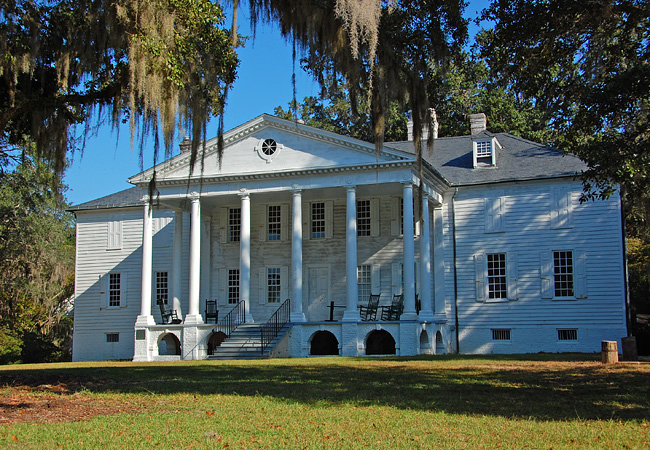
Hampton Plantation
| Photos by Ben Prepelka |
|
A tour of the Hampton Plantation State Historic Site may be one of the best ways to experience South Carolina’s cultural heritage and Low Country history. The Hampton Plantation story begins in the mid 18th century and continues on into the 20th, tracing the lives of three prominent families among the coastal plains. Hampton’s last owner, Archibald Rutledge, has captured the essence of Low Country living, found woven throughout his poems and writings. Born in 1883, Rutledge began writing in his teens and continued into his 80s. Named Poet Laureate of South Carolina, Rutledge died just weeks before his ninetieth birthday in the same room he was born.
|
 Built sometime between 1730 and 1750, the plantation house quickly evolved, financed by the
Copyright © 2013 Benjamin Prepelka
All Rights Reserved