Scenic USA - South Carolina
Each day Scenic USA presents a new and interesting photo feature from somewhere in the United States. Chosen from a wide variety
of historic sites, city scenes, backcountry byways, points of interest and America's best parklands, this site offers the viewer hundreds
of unique vacation destinations and photographic subjects. Each feature is coupled with a brief explanation. For further detailed
information, links to other sites are provided, but are never to be considered an endorsement.
Columbia Riverfront Park

|
 Columbia’s Riverfront Park, located where the Broad and Saluda rivers join to form the Congaree River, follows the Columbia Canal. This 167 acre linear city park is popular among joggers, walkers and bicyclists. A boardwalk bridges the canal and passes the original waterworks and hydro-electric plant. Part of the Three Rivers Greenway, this series of riverfront pathways has been recently named as one of the country’s most promising ways to reconnect Americans to the natural world.
The canal and a series of locks were built in the 1820s to bypass unnavigable river rapids. Hundreds of Irish indentured servants where brought into Columbia to help dig the canal and built the infrastructure. Unaccustomed to the heat and humidity, many workers succumbed to heat exhaustion and disease. Those that survived formed a large Irish community that was eventually dubbed "Little Dublin". Just over three miles long, the Columbia Canal became an important transportation corridor until 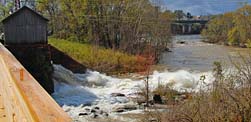 it was supplanted by the railroads. Reconstructed between 1888 and 1891, the canal provided electricity to the first hydro-electrical powered textile mill. An important source of water for Columbia, Abram Blanding is credited with developing the first waterworks, pumping water to city residents using a steam powered engine. it was supplanted by the railroads. Reconstructed between 1888 and 1891, the canal provided electricity to the first hydro-electrical powered textile mill. An important source of water for Columbia, Abram Blanding is credited with developing the first waterworks, pumping water to city residents using a steam powered engine.
Today, the Columbia water treatment plant still draws millions of gallons of water from the canal every day. The canal also continues to provide hydroelectric power for Columbia residents.
Area Map
|
Copyright © 2013 Benjamin Prepelka
All Rights Reserved
