Scenic USA - Maryland
Each day Scenic USA presents a different and interesting photo feature from somewhere in
the United States of America. Chosen from a wide variety of historic sites, city scenes, back-
country
byways, points of interest and America's popular parklands, this site offers the viewer
hundreds of unique vacation destinations and photographic subjects. Each photo is coupled
with a brief explanation. For further detailed information, web links to other sites are provided,
however these links should not be considered any type of endorsement.

Other nearby
Points of Interest
South Mountain State Park - MD
Washington Monument State Park - MD
Loys Station Covered Bridge - MD
At no extra cost to you, using this link helps support Scenic USA when you shop on-line at Amazon
Monocacy National Battlefield
| Photos by Brad Troy Brad Troy Photography |
European explorers, traders and settlers arrived in the Maryland piedmont during the first half of the 18th century. By the late 1700s, Maryland’s Frederick County was a thriving agricultural community. Frederick, also the name of the county's largest city, became an important industrial area, attracting several main roadways and America's first railroad.
During the nation's Civil War, Frederick’s importance invited plenty of attention from both Confederate and Union forces. Nearing war's end, General Robert E. Lee planned a last ditch effort to shift the fighting back to the North. Lee's plan sent General Jubal Early and 15,000 confederate troops through the Shenandoah Valley, Frederick County, and on to the northern capital at Washington D.C. Hoping to fend off Early's advance, Union Major General Lew Wallace hastily organized a force to delay Early's troops at Monocacy Junction.
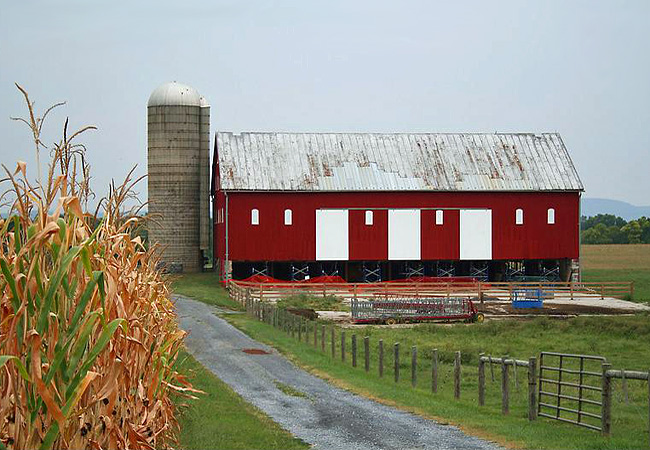
Today, not much has changed in the Monocacy River Valley since the close of the Civil War. Here in a peaceful valley visitors are able to witness the area of some of the heaviest combat. The Thomas Farm was caught directly between Union and Confederate battle lines. 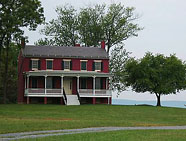 Artillery from the nearby Worthington farm (inset photo) forced the Thomas family into their cellar. After the battle, Lieutenant General Ulysses S. Grant stayed on at the Thomas house plotting out General Sherman’s march to the sea.
Although the Monocacy National Battlefield was created by a Congressional Act in 1934, the park was not opened for another 56 years. Due to the lack of funds, the National Park Service only began to establish boundaries in 1970 and subsequently purchased land during the 1980s. By 1982, the Worthington and Thomas farms were added as part of the Monocacy Battlefield Park.
Monocacy Battlefield Park Directions
Copyright © 2013-15 Benjamin Prepelka
All Rights Reserved