|
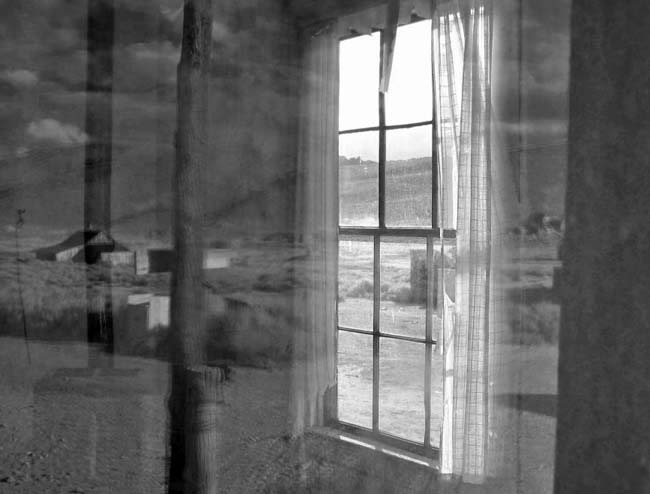
Scenic USA - California Bodie Reflections |
|

| Photos by Roger Gillette |
This ghostly reflection couldn't be a more appropriate image for the town of Bodie.  Known as the most lawless, wildest and toughest mining town the West had ever known, it's been said there was a killing every day. Perhaps the ghosts of this lawless camp still reside here today.
In 1859 William "Waterman" Bodey discovered gold at what is known today as Bodie Bluff near Bridgeport, California. Caught in a November snowstorm and dying of exposure, Bodie was named in his honor. Not too much attention was paid to this lack-luster town until a mine cave-in revealed a mother lode. As word spread hundreds of prospectors, stricken with gold fever, poured in. By 1880, an estimated population of 7000 called Bodie home.
In a town that supported 65 saloons, 10 gambling halls, 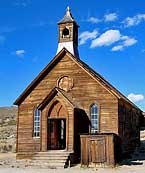 brothels and opium dens, the rough and tumble population offered quite a challenge for a preacher and his followers. While wildfires reduced a huge section of the town to ashes, the Bodie's Methodist Church still stands among today's count of 170 buildings. The Cain House also survived the last 130 years, along with its remarkable glassed-in porch.
During 25 years of prosperity Bodie's mining claims were estimated at 100 million dollars. But, just like countless other western mining towns, when the precious metals dwindled,  townspeople lost their source of income and quietly dispersed.
One of the most complete ghost towns in America, the State of California took control in 1962, hoping to preserve the town. The same harsh winds and deadly winter temperatures, which killed the town's founder, still haunt the state park today. Built at a high elevation of almost 9000 feet, frigid winters and dry air have aided preservation of bodie's buildings. Bodie's winters, one of the coldest places in the United States, logged a series of record low temperatures for 71 days. The Bodie State Historic Park preservation attempt is labeled with a process called arrested decay, looking much like it did when residents abandoned everything. What's left behind is a fine example of 19th century American history.
Area Map
|
Additional Points of Interest |
|
Copyright © 2007-15 Benjamin Prepelka
All Rights Reserved